I've been making handmade jewelry for years now, and in that time I've heard the question about price more times than I can count. Every time, I catch myself thinking the same thing: it was never really about the price. People understand "handmade" in very different ways, and they're rarely sure what they're actually paying for when they choose a piece made by hand.
Wanting to know if this was just a Ukrainian thing, I started reading stories and discussions from makers in the US, Canada, the UK, and elsewhere, comparing them with my own experience. What struck me was how similar these conversations were. No matter the language, country, or culture, makers keep circling back to the same point: the most valuable part of handmade work almost always goes unnoticed.
That's when I realized this piece isn't really about why handmade work costs more. It's about something else entirely: what handmade actually means, why an artisan's work can't be judged by the same standards as mass production, and why its most important part is often invisible at first glance.
What Handmade Really Means
Over the past few years, the word "handmade" has become incredibly popular. You see it on marketplaces, on social media, at craft fairs, in shop names. But the more I come across it, the more I realize: everyone means something slightly different by it.
For some, handmade simply means anything made by hand. For me, that's not enough. Handmade isn't about a maker growing their own wood, casting their own metal, or crafting every single bead from scratch. And it's definitely not about refusing to use modern tools.
To me, handmade begins the moment someone takes full responsibility for the piece they're about to create. They choose the materials, search for combinations of color and texture, rework the composition, let go of choices that seemed good at first, and stop only when it finally feels right.
That's why, to me, handmade is really about authorship, not a technique or a method of production, but the ownership of every single decision. Two pieces can be made from the exact same materials and still look and feel completely different. And that difference doesn't come from the stones or the findings, it comes from the person who made them.
The Real Value of Handmade Work Isn't in the Materials
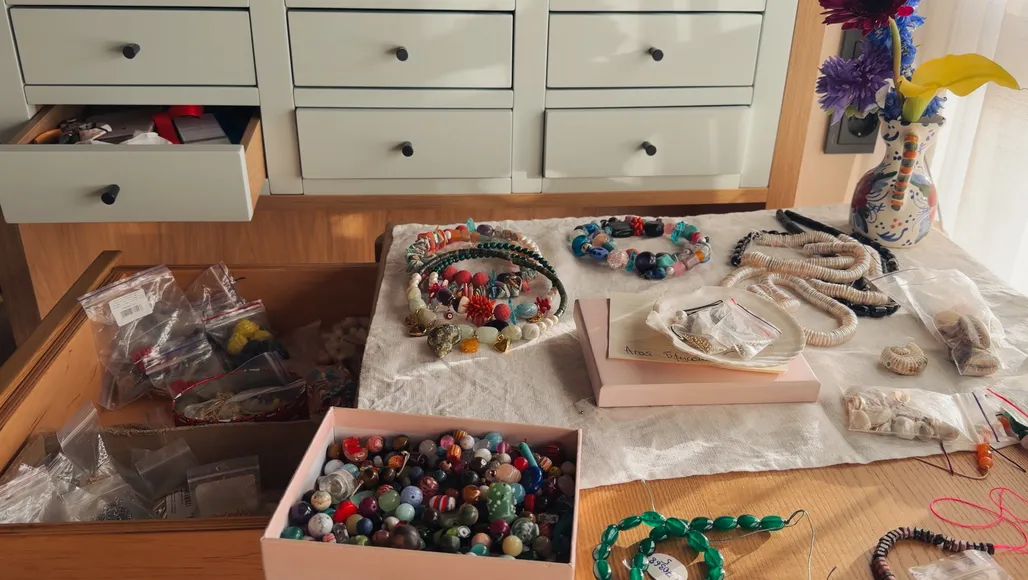
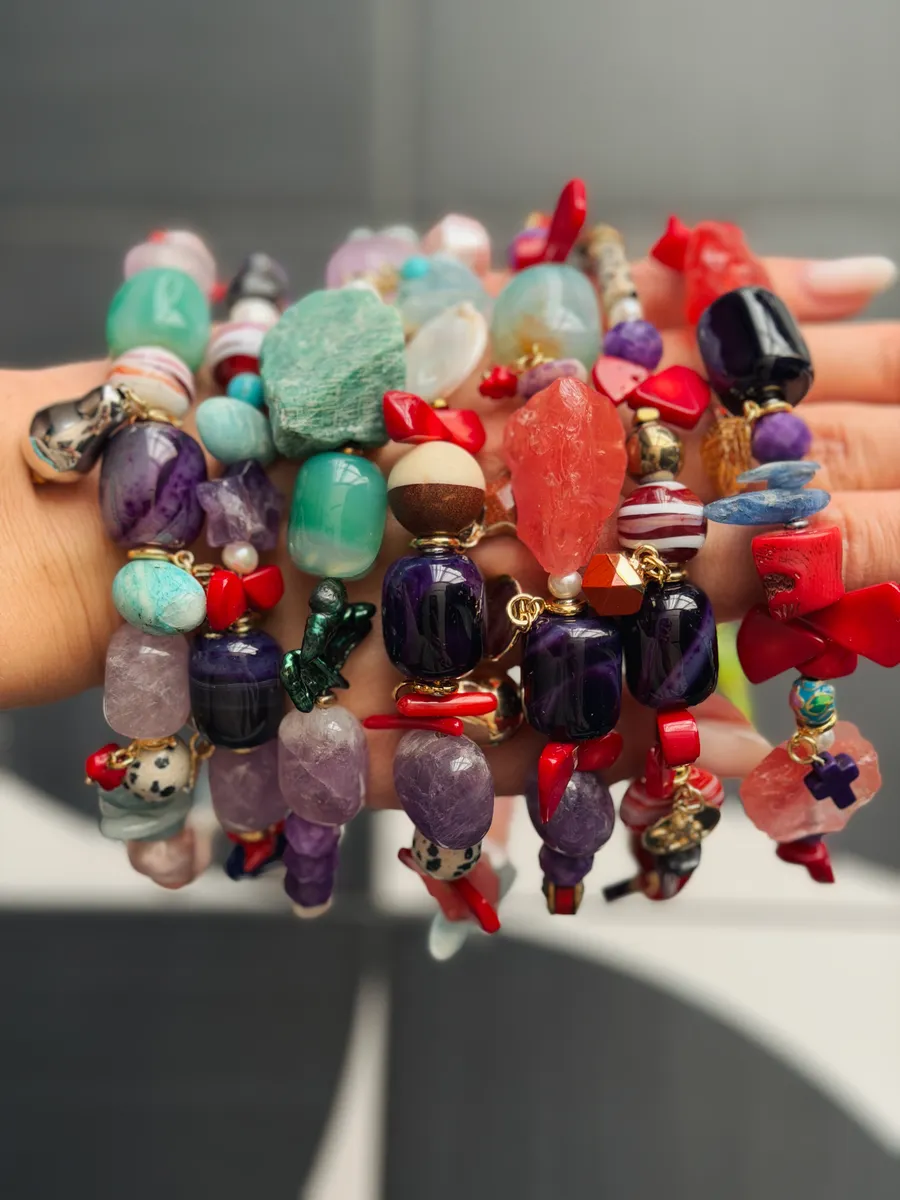
When someone looks at a handmade piece, they almost always start doing the math: how much did the stones cost, the clasp, the thread. And that's completely natural, we all judge what we can see and count. That's exactly why the final price sometimes feels off: add up just the materials, and it rarely matches the number on the tag.
But behind every piece there's another kind of work, the kind you can't weigh on a scale. Choosing the colors. Finding combinations where the stones complement each other instead of competing. Deciding on a length that will sit naturally. Knowing when to stop, or when to let go of a beautiful detail because it throws off the whole piece.
That's where handmade work actually comes from. Skill isn't about knowing how to put a piece together. It's about knowing which piece isn't worth putting together at all. And that's exactly what a customer is paying for the most, even if they never realize it.
It happens all the time: I'm almost done with a piece. It has everything, beautiful stones, the right proportions, clean work. And then I look at it and just know: this still isn't it.
So I take it apart completely, back down to individual stones, and start over.
From the outside, it might look like hours of work just went to waste. In reality, that's when the most important part happens. Handmade work isn't only about creating something, it's also about being willing to walk away from something nearly finished if it doesn't give you the feeling you started out chasing.
And yet I keep seeing makers try to justify their prices with simple formulas: cost of materials times two, plus hours worked. But every time, I'm reminded: that math almost never adds up.
Behind ten hours spent on a single piece are years of practice, hundreds of failed attempts, the search for your own style, and dozens of pieces that never made it in front of a customer at all. We talk a lot about the time it takes to make something. We almost never talk about the journey that made it possible.
And in Ukraine, there's another reality that's impossible to ignore. Russia's full-scale invasion changed everything: material costs, logistics, people's purchasing power, the market itself. And yet many makers still try to keep their work affordable, often at the expense of their own income.
Why Handmade Work Can't Be Scaled
There's another thing people talk about far less often.
The modern world is used to thinking in scale: if there's demand for something, you just make more of it. When a big brand gets a thousand new orders, it opens another production line, hires more people, buys more materials, and before long, it's simply pumping out far more product.
When a maker gets a thousand orders, they don't suddenly grow nine hundred and ninety-nine more pairs of hands.
That's not a flaw. It's actually the whole point of handmade: you can't scale it the way you'd scale factory production without changing what it fundamentally is. Every piece needs attention, every decision gets made from scratch, and every item passes through the hands of one person who's responsible for it from the first material choice to the final clasp. So handmade has a natural limit, one that isn't set by demand or market potential, but by how much a single person can actually make without sacrificing quality or attention to detail.
There's another side to this that a customer almost never sees. Every piece starts long before I ever pick up a tool. When I was just starting out, I made pieces from cord and thread, and it took me switching suppliers about five times before I found the right ones, the ones that actually sat the way I wanted. Eventually I gave up on braided cord necklaces entirely, started upgrading my findings, gradually raised the quality of my materials, until one day I realized I wanted to make genuinely good jewelry, not just something that looked nice. Now, when I pick out a stone for a new piece, I know exactly what I'm trying to avoid.
What People Are Really Looking For
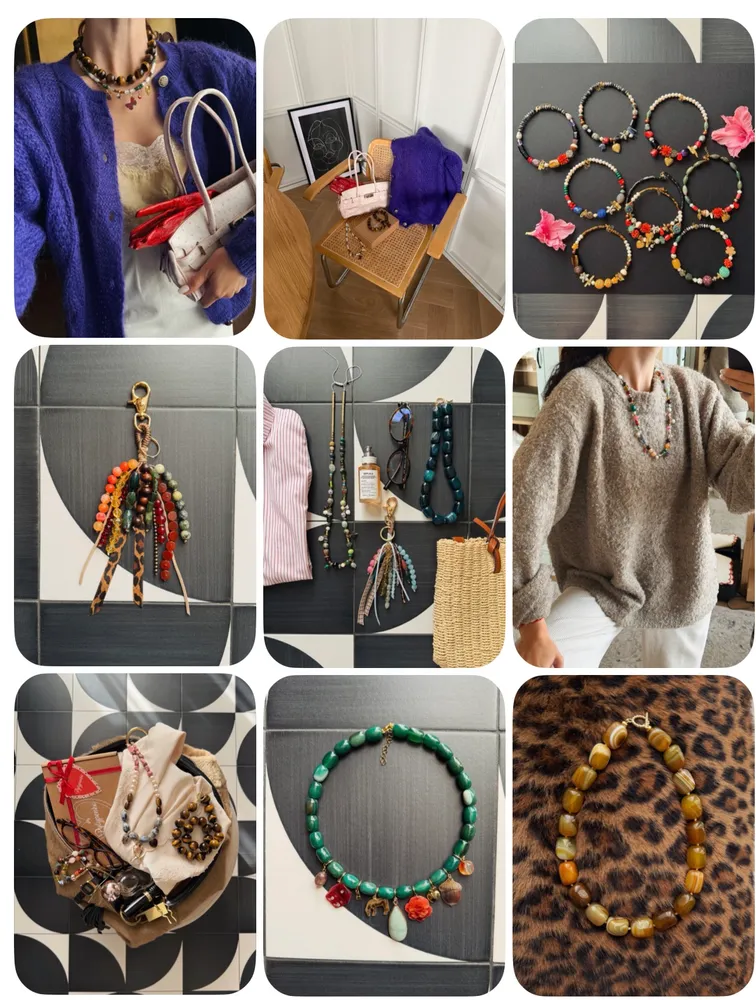
Over the years, I've thought less and less about price as something I need to justify to anyone. Instead, I keep noticing something else: people come to handmade work for all sorts of reasons that have nothing to do with price. Someone's looking for a gift. Someone wants a piece no one else will have. Someone's making a point of supporting Ukrainian makers. But I think there's usually one more reason underneath all of that, one we rarely talk about: people aren't just buying a piece, they're buying into a maker's point of view.
They trust how a maker sees color, how they pair stones, where they choose to stop and what they choose to leave out. We do this in plenty of areas beyond handmade work: we read certain writers, we listen to certain musicians, because their way of seeing the world resonates with us. Handmade works the same way.
A fair price for handmade work doesn't necessarily mean a high price, it means an honest one: one that accounts for the whole journey behind the piece, not just the stone or the findings. For some makers, that journey leads to an accessible piece. For others, it leads to a collector's item. Either way, the principle stays the same.
That's why I don't try to prove anymore that handmade work is "worth the money." What I do know is that someone choosing a piece by an independent maker is choosing far more than stone or metal: they're choosing experience, a particular point of view, and a maker's right to create things exactly the way they see them.
And maybe that's what handmade really is.
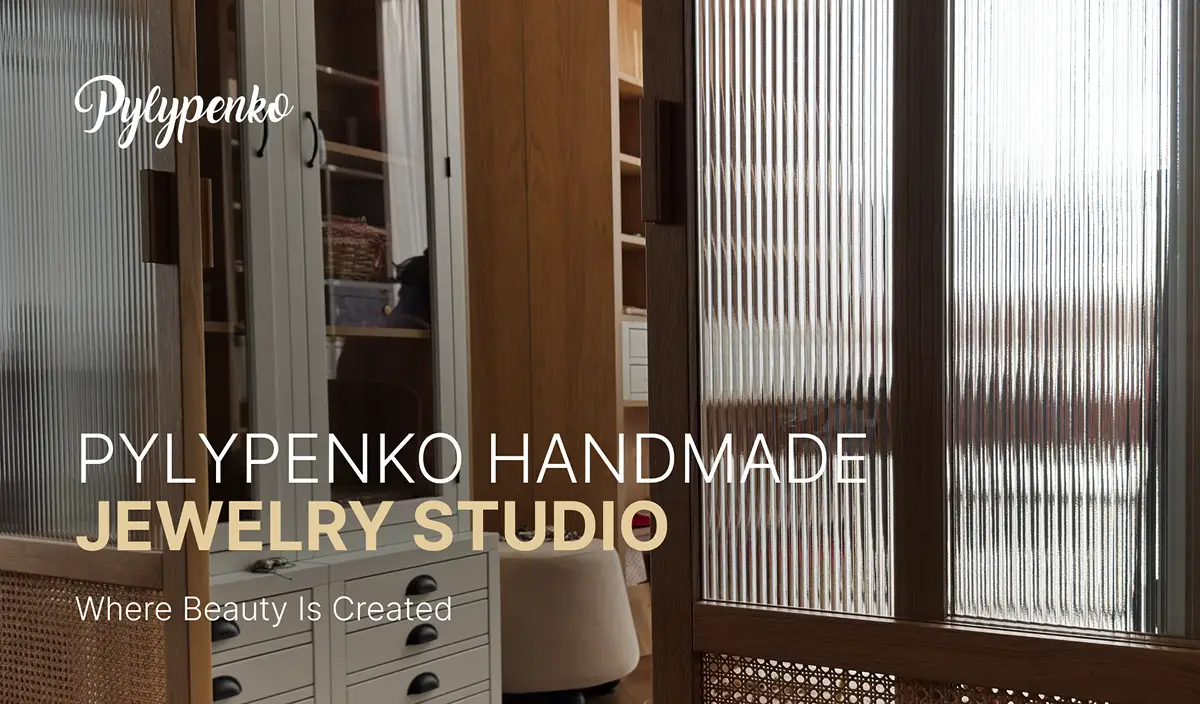
If you'd like to take a peek behind the scenes and see where every piece comes to life, I'd love to show you my workshop.